Whenever a new system enters a workplace, the same quiet question tends to follow it. Is this here to replace people? It is a fair question. Technology has often been introduced with promises of efficiency that eventually translate into fewer roles or less human involvement. Martha was never built with that intention.
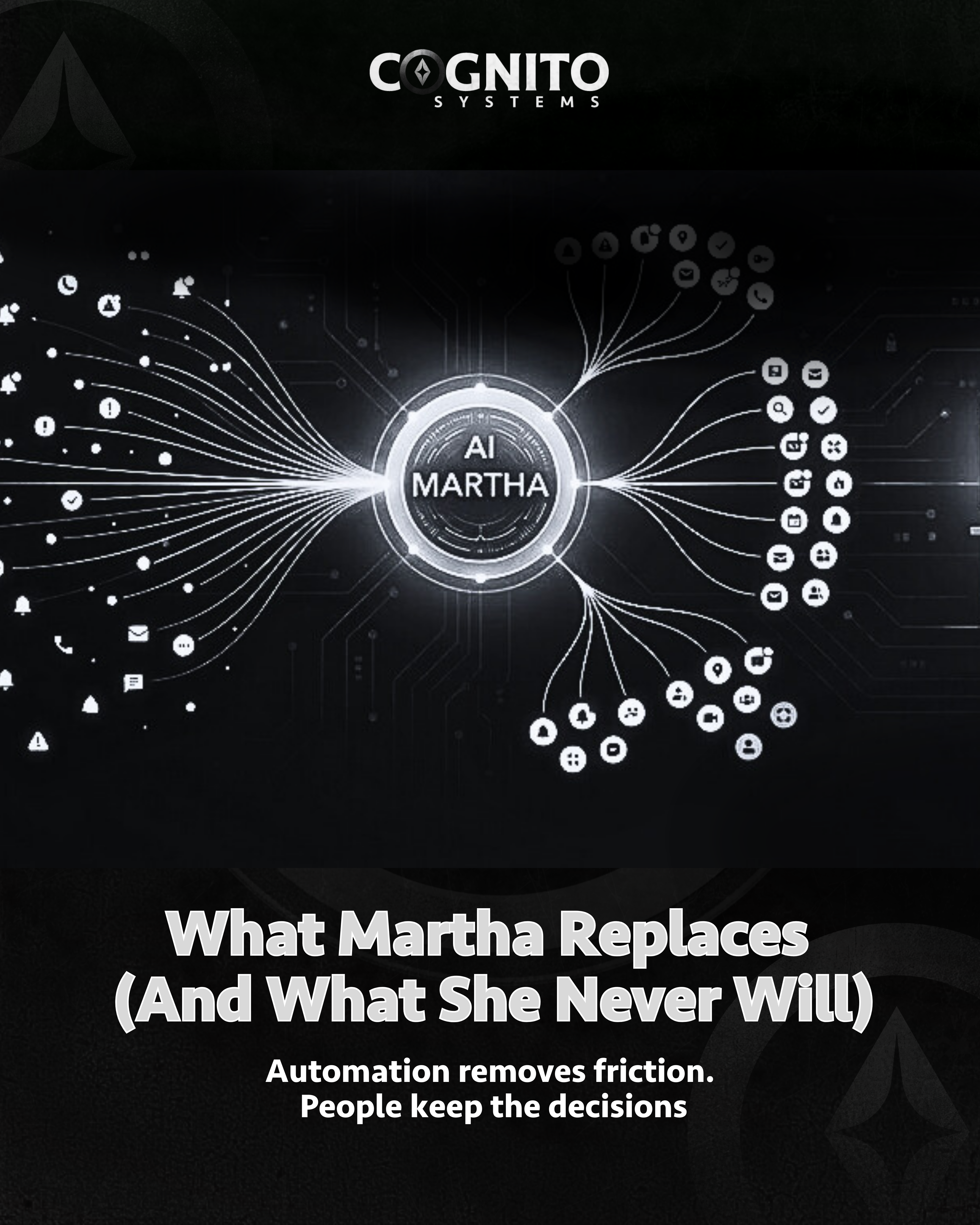
Martha replaces the small but constant tasks that quietly drain time and attention. Monitoring dashboards. Checking the same signals again and again. Tracing where an issue started. Figuring out who should respond next. These tasks are necessary, but they rarely require deep thinking. They simply require persistence and visibility.
That is where Martha helps. It watches systems continuously, tracks patterns across signals, and raises the right alerts when something needs attention. Routine escalations happen automatically, and information that used to require several steps to uncover is already organized and visible.
The result is not fewer people. It is fewer moments where people are forced to act like monitors.
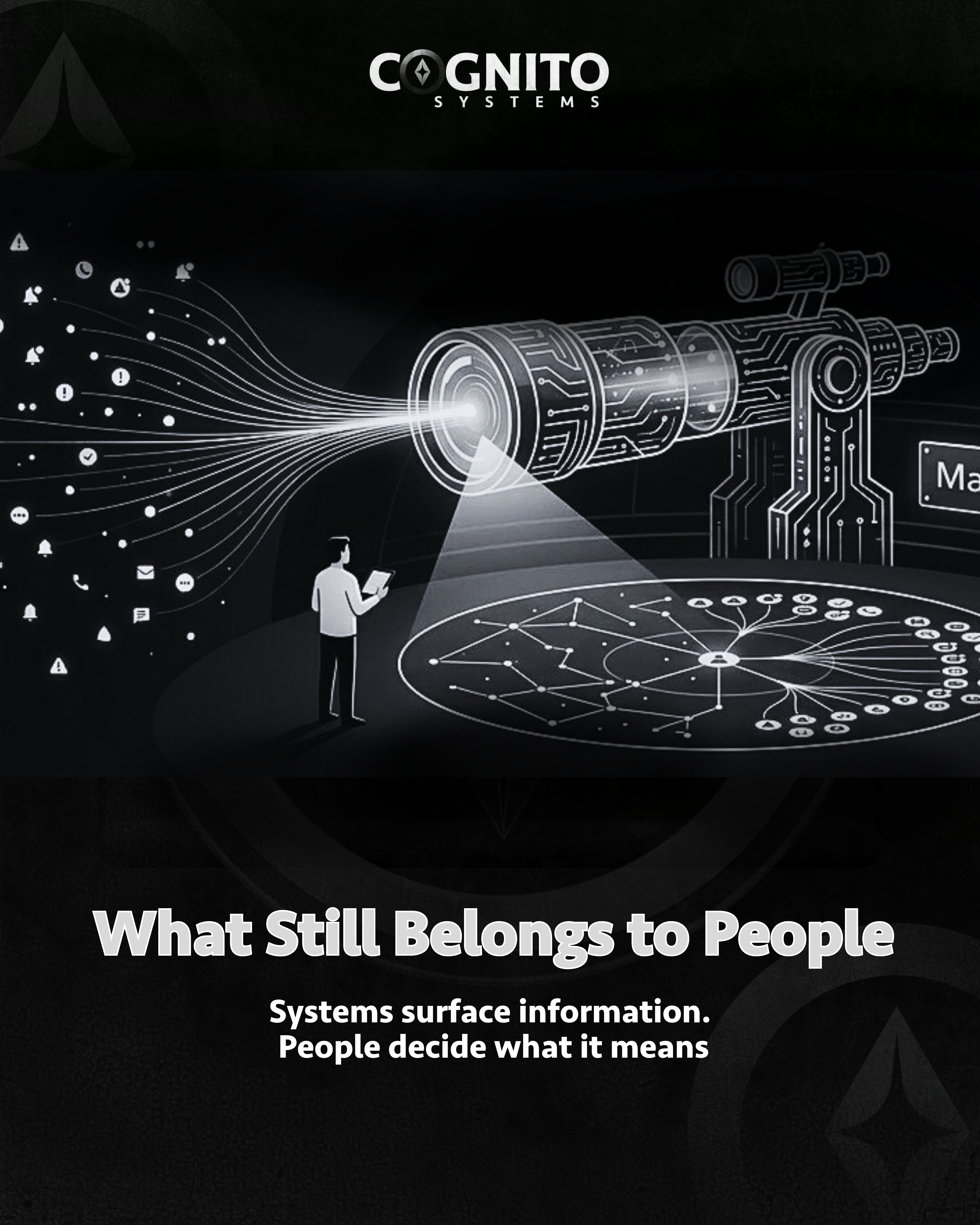
What Still Belongs to People
What Martha does not replace is judgment. People still decide what matters, what risks are acceptable, and how the organization should respond. Context, experience, and strategy remain human responsibilities. A system can surface patterns, but it cannot understand the broader goals behind a decision.
Martha simply ensures that the right information appears at the right moment so those decisions can be made quickly and confidently. Instead of searching for answers, teams can focus on choosing the best response.
Another way to think about it is this: Martha removes friction, not people. Complex systems create blind spots over time. Alerts are missed. Ownership becomes unclear. Small issues sit unnoticed until they become bigger problems. By keeping watch and organizing signals, Martha closes those gaps before they grow.
This shift changes how teams work. Less time is spent reacting to surprises. More time is spent improving systems, solving meaningful problems, and planning ahead. Instead of constantly asking “What just happened?” teams can focus on “What should we do next?”
That difference is where the real value appears. Martha does not replace people. It gives them back the time and clarity they need to do the work that actually requires them.